When Beliefs Block Animal Communication & What Animals Reveal Beyond Them
December 26, 2025 Filed in:
Animal AwarenessJust because a person is not aware of a phenomenon doesn’t mean it does not exist. Beliefs can act as barriers to perceiving or accepting what lies beyond one’s current reality or experience.
Even scientific assumptions, supposed to be based on careful inquiry and clear observation, can be just as resistant to new discoveries as religious or political beliefs. Any belief system, when held too rigidly, can limit what we are willing or able to perceive.
Over the years, I have heard many beliefs expressed by students, scientists, spiritual teachers, and animal communicators that can prevent seeing, hearing, or experiencing the full range of animal capability, communication, and wisdom. These include:
- Animals are not conscious in the way humans are.
- Animals cannot make rational decisions and act only from instinct.
- Dogs have the mental capacity of three-year-old children.
- Animals can only communicate telepathically in short phrases and do not express complex insights.
- Only humans are made in the likeness of God or have a divine aspect.
- Reincarnation does not exist.
- Souls who have lived as animals do not reincarnate as humans.
- Animals are not aware of spiritual realities or higher wisdom.
The following examples, published in my book, When Animals Speak, illustrate communications from animals about reincarnation and identity that go well beyond these limiting assumptions.
The Connecting Thread
As spiritual beings, we are free to choose the form of life that suits our desire for experience in the physical universe. Those who have had human bodies may now inhabit animal forms, or vice versa, for various reasons and without any set paradigm that applies to all. In my earlier book, Animal Talk and in my audio recordings, I share numerous examples of beings moving between species from life to life according to their purposes.
Some individuals choose to remain within one species for many lifetimes—human or feline, for example—because they enjoy it or find it fulfilling. Others explore different forms. There are as many reasons and patterns as there are individuals.
Most domesticated animals I have communicated with have had previous experience as humans. They are often comfortable with human thinking and emotions and enjoy helping people navigate their often complex and turbulent lives. Many readily accept being a cat, horse, or other animal, even if they have not inhabited that form before. In earlier human lives, they may have loved those animals, understood them, or strongly identified with them.
Some animals who have been human before may even expect or demand certain “privileges” of human living.
Animals who have not had human experience, or who have never lived closely with humans, may find people confusing, overwhelming, or even frightening. They may wish to keep their distance for a time, choosing a more feral or withdrawn existence while maintaining minimal or cautious contact with humans. By respecting their choices and understanding their perspective, we can greatly assist fearful animals in moving toward more comfortable and amiable coexistence.
Experiencing and mastering another way of life is often the primary reason for changing forms. Some animals are confused about the body they inhabit, especially if they strongly identify with a form they knew previously. They may have chosen this change at some point, yet remain uncertain about accepting it fully.
An individual's passion or persistent concern often has a past-life thread. People who work to rescue or assist animals may have been helping animals for many lifetimes, or they may be attempting to heal earlier experiences where they hurt animals in the past.
Horses who easily excel at dressage may have been equine champions before. Those who resist a particular activity may have already mastered it and wish to move on to something new.
In counseling animals to resolve unwanted behaviors or emotional distress, most situations are routinely handled by addressing the current life. However, past-life incidents may surface, and it can be helpful and often necessary to review them to release old injuries, attitudes, or decisions that still influence the present.
Releasing the Need to Suffer
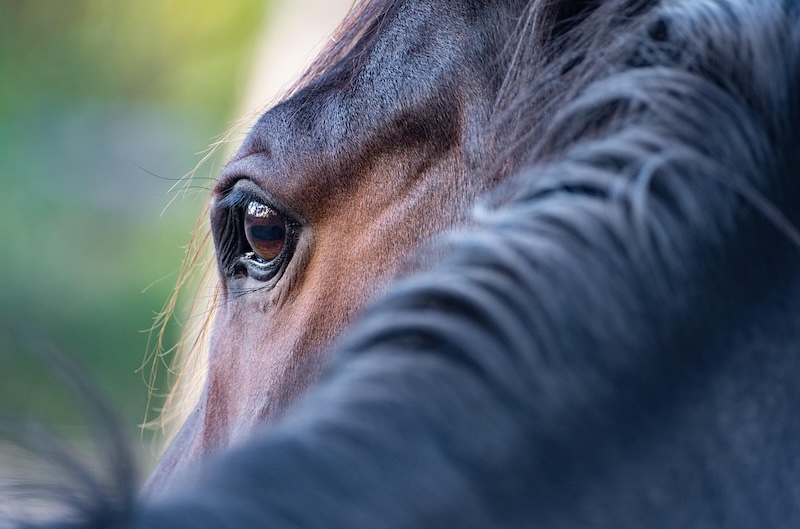
I spoke with Jayla, a Peruvian Paso horse, and her human companion, Karen. Karen wanted to understand why Jayla seemed sad. Although Jayla was content within her small herd, there was a persistent melancholy about her. Even under Karen’s care, Jayla seemed to attract mistreatment from others, as if Karen could not fully protect her.
As we communed, Jayla quietly revealed the source of her sadness. In her most recent human life, she had died in a concentration camp. In a life before that, she had been a Jewish rabbi. She was deeply immersed in the concept of atonement for wrong doing, and believed that to reach true and eternal happiness, she had to suffer, both for herself and others.
Even as a horse, a form she adopted because she loved horses and wanted a change from human life, she felt compelled to endure agony before she could be happy. As we talked, she was able to release some of her anguish. She came to realize that she had already fulfilled her need for atonement and could allow herself to feel happy again.
Choosing Distance, Learning Trust
Johnny was an adopted wild burro whose person called me because he was difficult to work with. Initially, he was very uncommunicative, presenting an image of himself with his head lowered in resistance. After his person told me about his history and how she had worked with him, he began to open up.
In his most recent lifetime, he had been a man who lived in Montana, Wyoming, and Idaho, roping and taming wild horses and burros. He was unsociable and disliked people, but he strongly identified with burros, feeling they were a lot like him, steely and stubborn. He felt he could mesmerize the wild equines by the way he talked to them and had a reputation for catching animals when others couldn't.
He became a wild burro this time around because he loved them and wanted to live a free life on the plains. As we talked, he acknowledged that his job in this lifetime was to move closer to accepting humans. His habitual resistance was growing tiresome, yet he wasn't ready for a complete transformation.
For now, he wanted peace and quiet. He disliked people talking to him and found human voices irritating. His person had already noticed that he was more relaxed when she spoke softly. Johnny suggested that, if she wanted to build trust, she should sit silently with her back to him. He would respect her for that.
I recommended that she communicate telepathically with him, without using her voice to get his attention. He loved it when she did therapeutic touch with him, but he didn't like her gazing at him and trying to discern his emotions. She was willing to respect his wishes, and with patience, they made steady progress in his training.
The Caribou in a Horse’s Body
Robyn Hood asked me to speak with one of her Icelandic horses, a white mare with blue eyes, an unusual and striking appearance. Robyn felt that the horse was an odd character and was concerned about her.
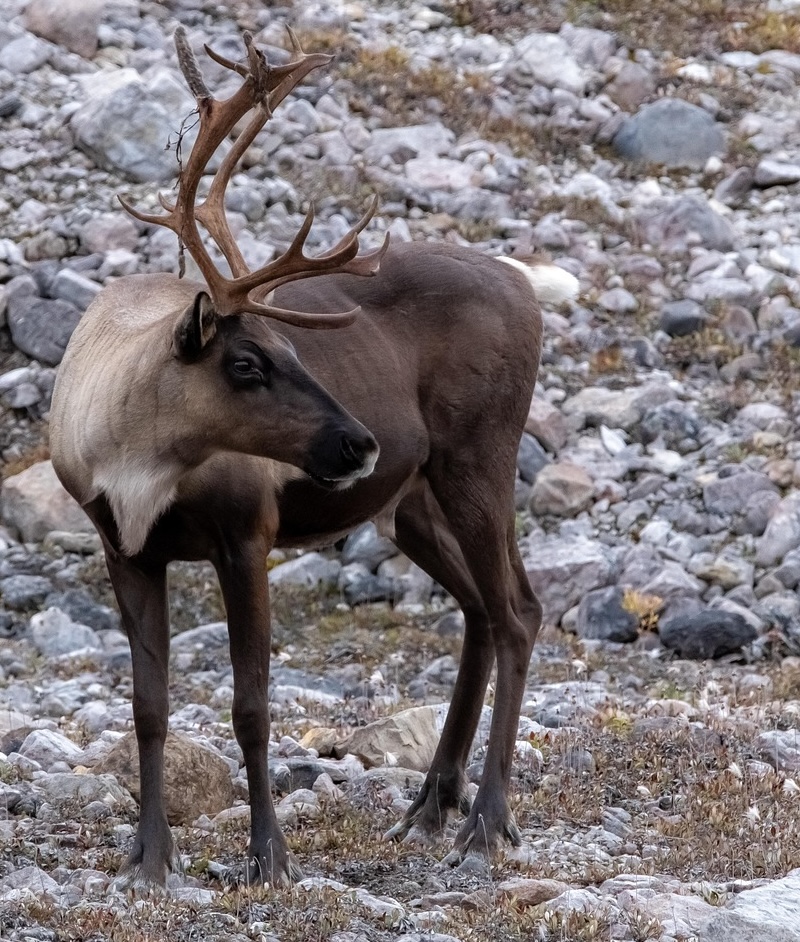
The mare approached us in the field and began communicating immediately. I noticed a strange shape to the energy field around her head. She explained that she didn't care about the other horses or what people thought. She was not a horse, but a caribou, and no one could change her. She intended to live exactly as she pleased.
Then I saw clearly why her aura was shaped differently. It outlined antlers above her head!
Self-Image and Orientation
Feeling as if they are an animal other than their current body can be disorienting for animals, sometimes leading to unusual behavior or lack of fulfillment.
Listening to and counseling animals about their past-life experiences can help clear both lingering trauma and outdated self-images. Reorienting these animals to their present form and the opportunities available to it and inviting other confident, contented animals of the same species to assist them through their disorientation, can further support them.
Dee was a horse who resisted being saddled or ridden. Dee did not understand why her person could not simply walk beside her on trail rides. Riding seemed unnecessary and confusing to her.
When I asked Dee about her background, she immediately pictured herself as a beautiful white cat. In her previous life, she had watched her person leave to "go ride the horse” and thought the horse must be very special. She decided she would be a horse someday.
What she had not anticipated were the realities of a horse’s life, including having a rider. Dee seemed unaware of her size and strength and could not comprehend why someone wanted to sit on her back.
After our conversation, her trainer reported that the very next day they had the best session yet. Dee had a better understanding of what it meant to be a horse.
Stretch
When we communicate with animals, we need to be open to surprises and to release assumptions that are challenged by lived experience.
Or we can cling to familiar paradigms and dismiss anything that doesn’t agree with what we already believe.
As we expand our willingness to listen beyond familiar frameworks, animals continue to remind us that consciousness is not confined by species, form, or belief. When we meet them with curiosity rather than certainty, whole worlds of understanding quietly open.
The sky is not the limit when communicating with our fellow soul travelers of any species. For more reality-expanding experiences with animals and other forms of life, I invite you to explore When Animals Speak.